
London Design Week 2026: What We Saw, What Stood Out and Where Design Is Heading
London Design Festival 2026: What We Saw and What It Says About Design Now
London Design Festival is never really about finding one defining trend.
Moving between talks, installations and showrooms across London, what interested us this year was almost the opposite: how many different ideas of contemporary luxury are currently coexisting.
Our week took us from conversations about light at YDF Interiors to the precision of Boffi, the craftsmanship of Poltrona Frau, collectible design at Baxter and the unapologetic decoration of House of Hackney. The aesthetics could hardly be more different. What connected them was conviction.
YDF Interiors × Contardi: When Lighting Becomes Architecture
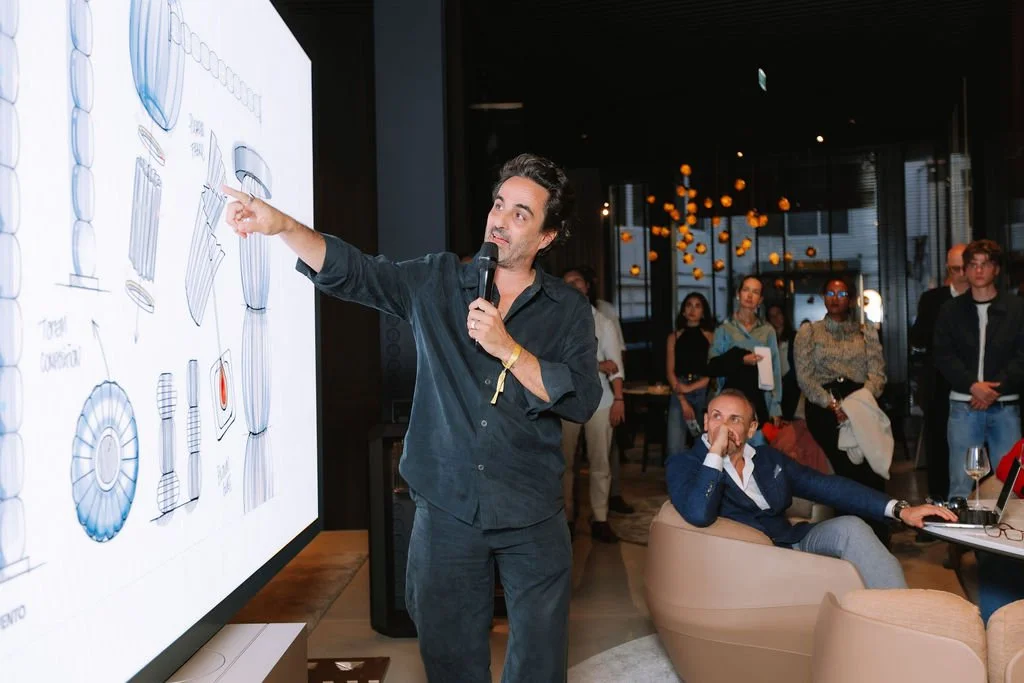
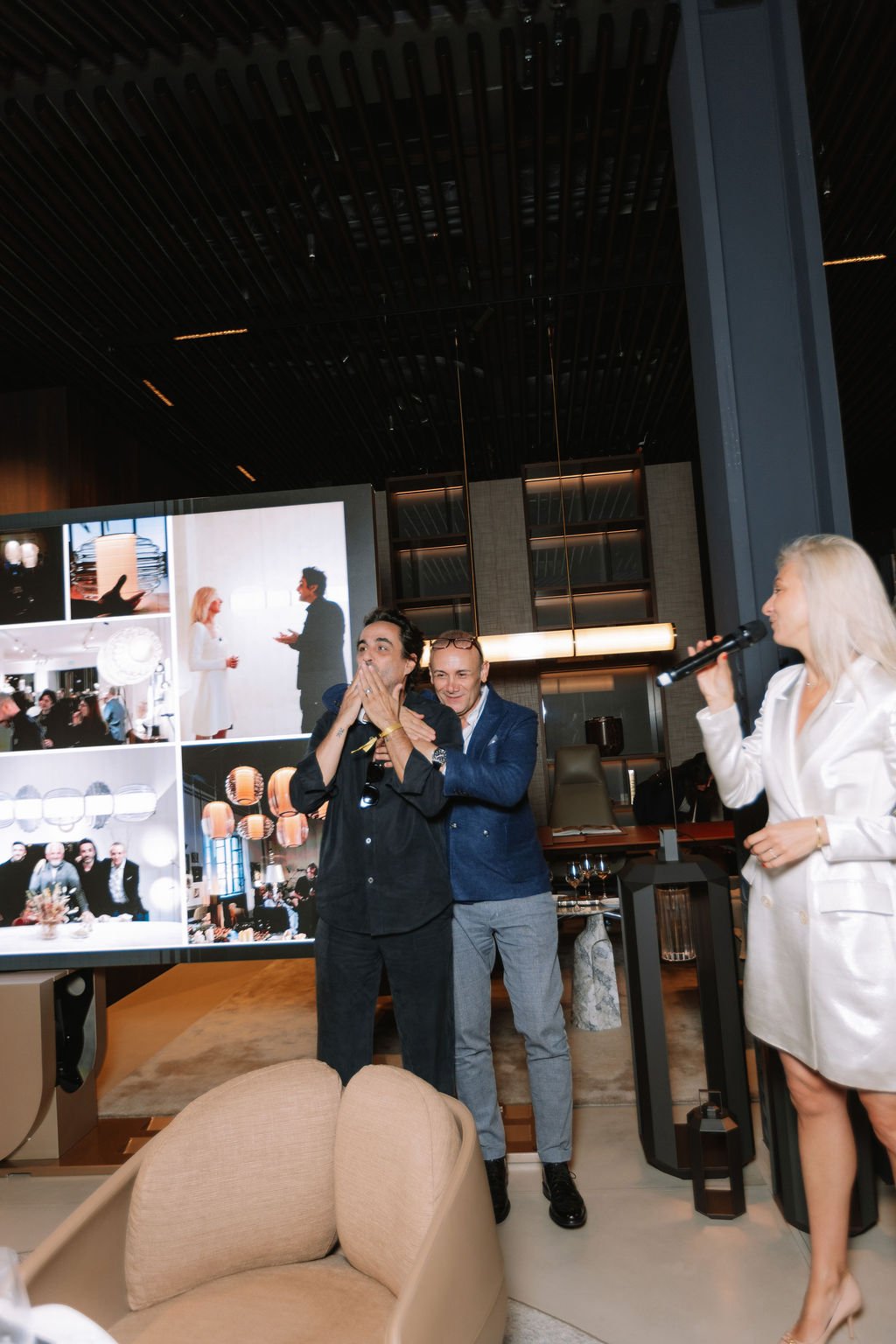
One of the most memorable moments was A Conversation on Light & Design at YDF Interiors, presented with Contardi.
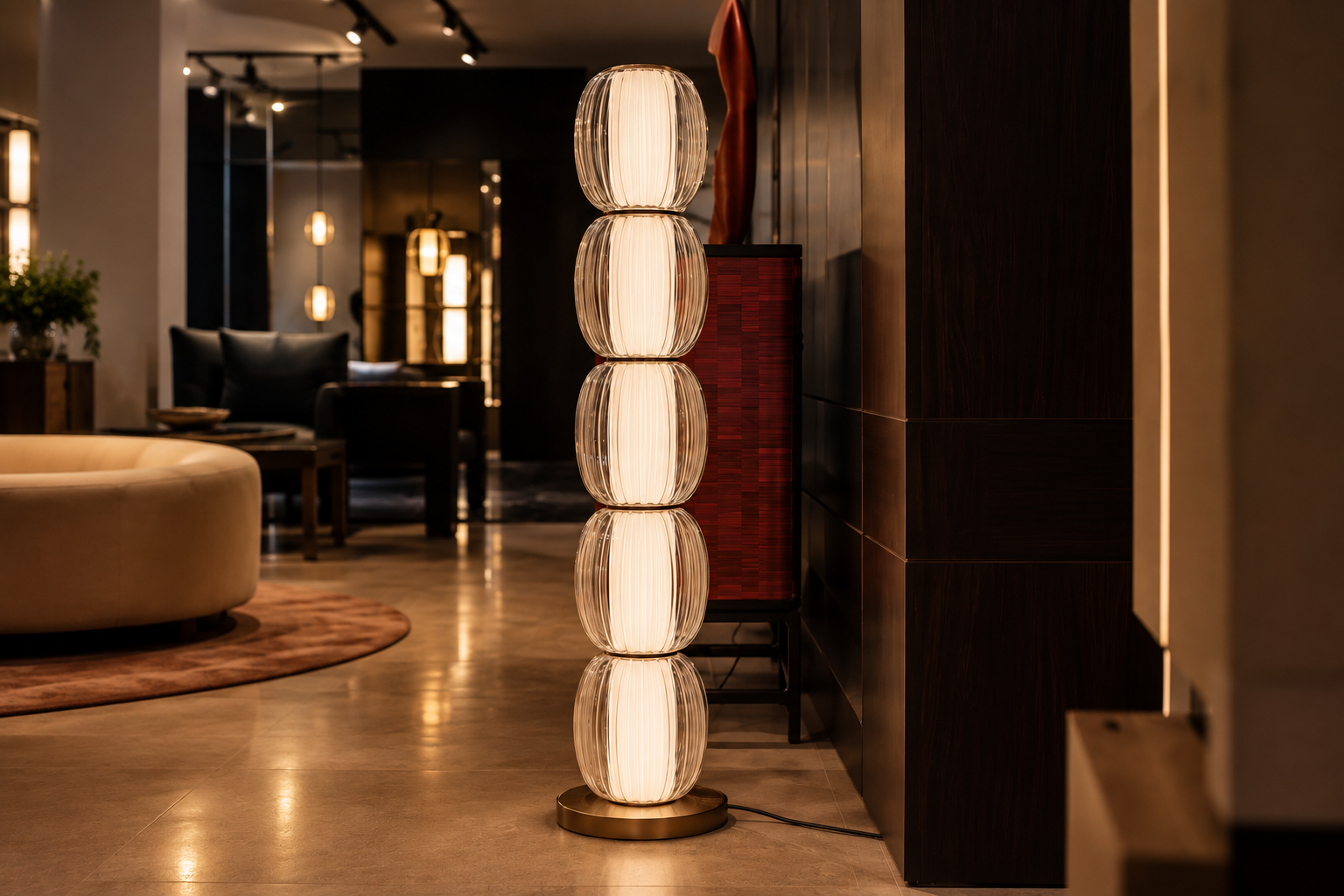
Gabriele Chiave, Co-Founder and Creative Director of Controvento, took us behind the development of Contardi's Alma collection, exploring how material, technology, form and light take a product from initial idea to finished object.
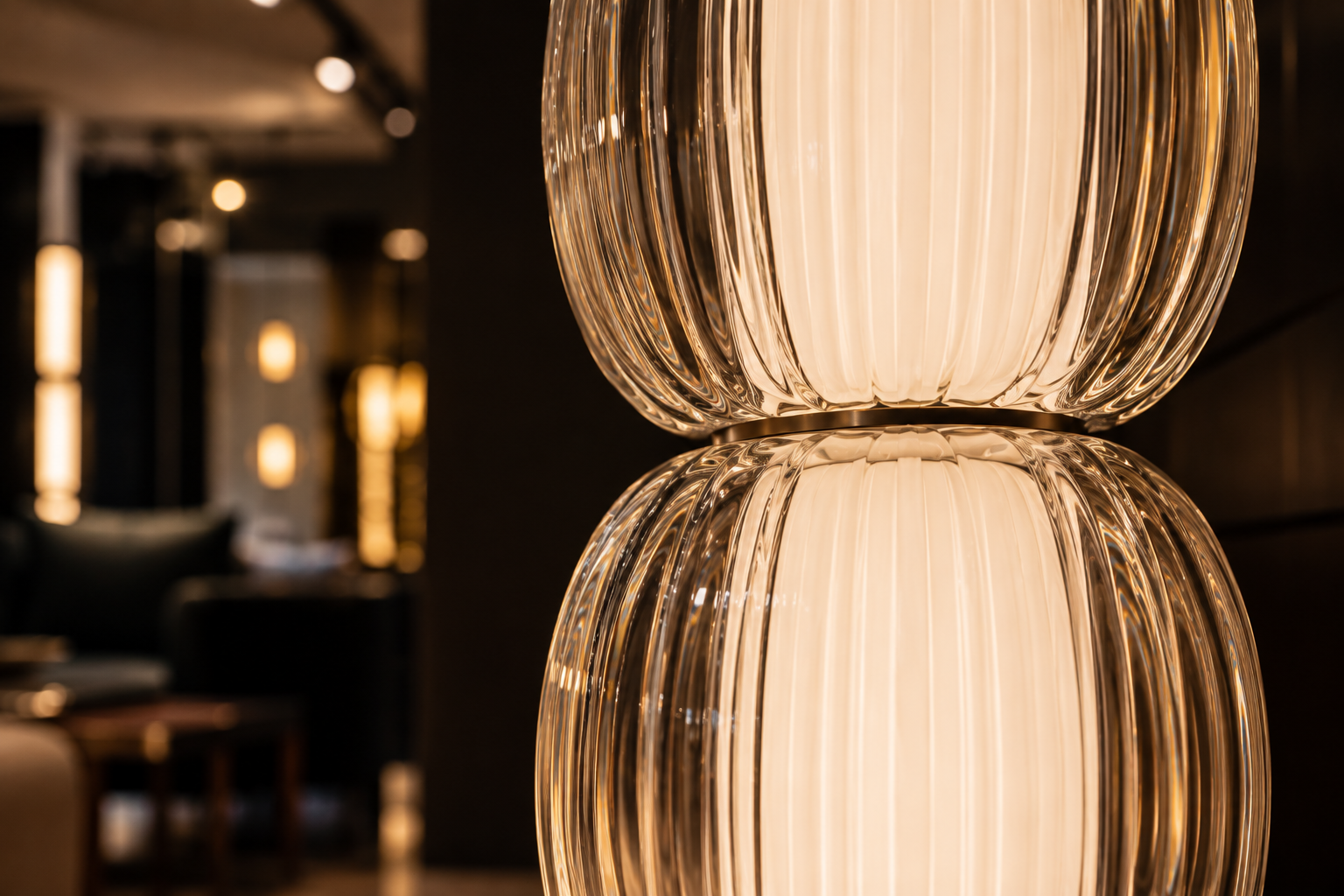
What stayed with us was the idea of lighting as much more than illumination. A successful light fitting has two lives. When switched on, it shapes shadow, atmosphere and our perception of space. When switched off, it remains an object within the architecture.
Lighting should not simply make a room bright enough. It can establish hierarchy, create intimacy and completely change the emotional reading of a space.
Boffi | DePadova: The Discipline of Restraint
At Boffi | DePadova, the language was quieter. This year marked 70 years of De Padova and 40 years of Piero Lissoni's art direction for Boffi, with the London showroom presenting its 2026 collections alongside the new XPL kitchen. There is an interesting lesson in Boffi's approach.
When decoration is removed, everything else has to work harder.
A junction becomes visible. Proportion matters more. The relationship between two materials becomes part of the composition. A handle, shadow gap or change in surface suddenly carries architectural weight.
Luxury here is not created by adding more. It comes from precision.
Poltrona Frau: Designing for Time
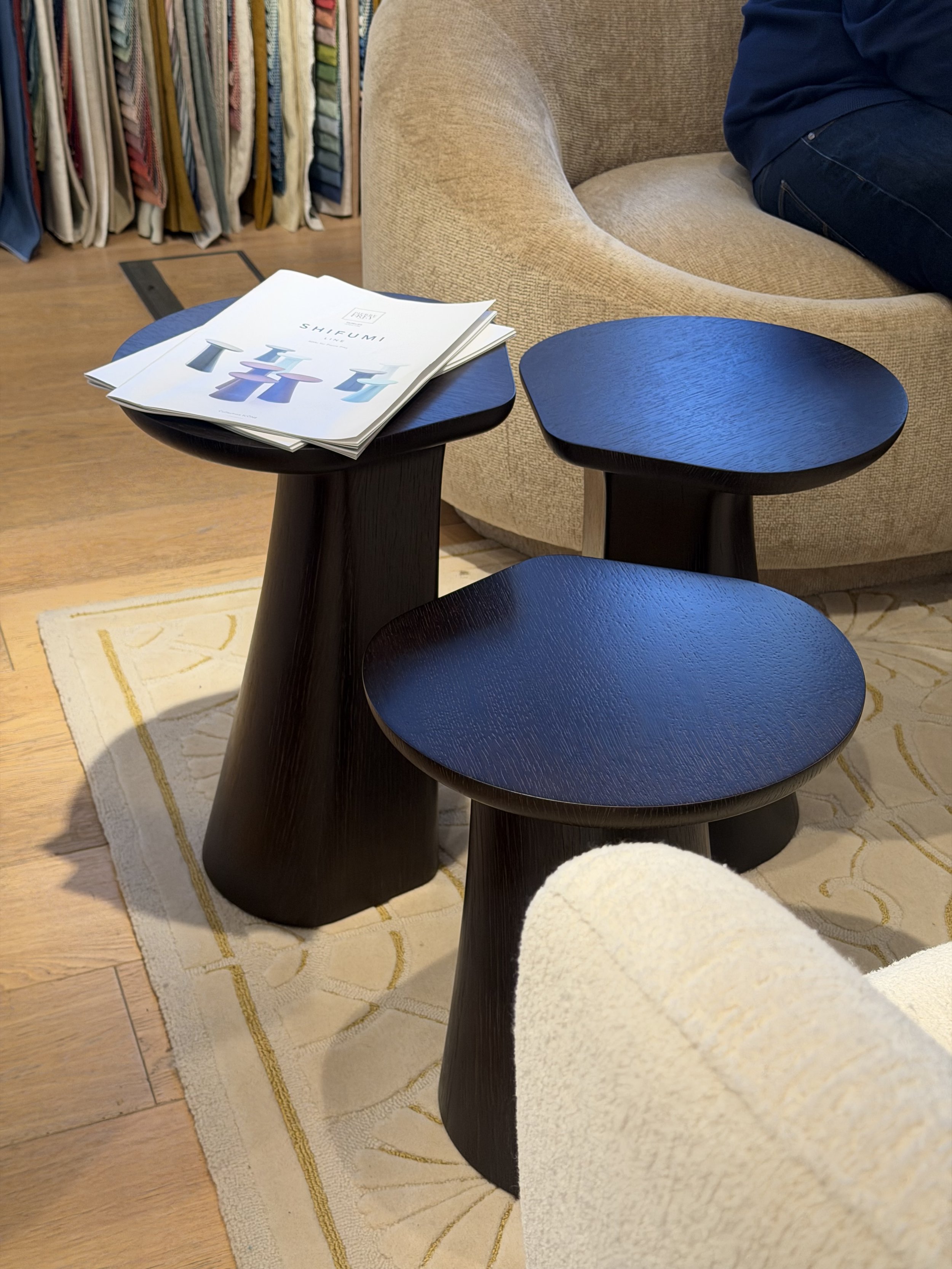
At Poltrona Frau, the conversation shifted from precision to longevity. Its 2026 collection, True Over Time, is built around the idea that good design should not simply survive physically, but develop meaning as it is lived with.
During London Design Festival, that craftsmanship was made particularly visible through a live demonstration by one of Poltrona Frau's master artisans.
It made us think about the difference between something that is expensive and something that is made to age well. Leather changes. Timber develops patina. Objects collect marks and associations with the people who use them. Perhaps real longevity in an interior is not about keeping something looking new.
It is about choosing materials and objects that become more interesting as they get older.
B&B Italia: When the Archive Meets the New
At B&B Italia, past and present were deliberately placed side by side. The 2026 collection included new work by Ronan Bouroullec, Antonio Citterio, Vincent Van Duysen and Michael Anastassiades, alongside the reissue of Richard Sapper's Nena armchair and a special edition of Luigi Caccia Dominioni's Catilina chair. That juxtaposition removes the usual boundary between "new" and "old" design.
A chair conceived decades ago can sit comfortably beside something launched in 2026. And perhaps that is one of the best tests of design.
Not whether an object looks current when it launches, but whether decades later it can still participate in a contemporary interior without feeling like a museum piece.
Molteni&C: Designing the Whole Interior
At Molteni&C, the 2026 collection expanded beyond furniture with the introduction of its bathroom collection in London. The launch formed part of Molteni&C's official London Design Festival programme.
It reflects a wider shift within luxury design: the boundaries between furniture, joinery, kitchens, bathrooms and interior architecture are becoming increasingly blurred. Brands are no longer necessarily designing isolated objects. They are designing increasingly complete environments. For interior designers, the interesting challenge is what happens next.
A beautifully resolved home should never feel like a showroom transplanted into someone's house. These highly developed systems still need to be layered with architecture, art, collected pieces and the personality of the people living there.
The system can provide the framework. The interior still needs a soul.
Baxter: When Furniture Becomes Art
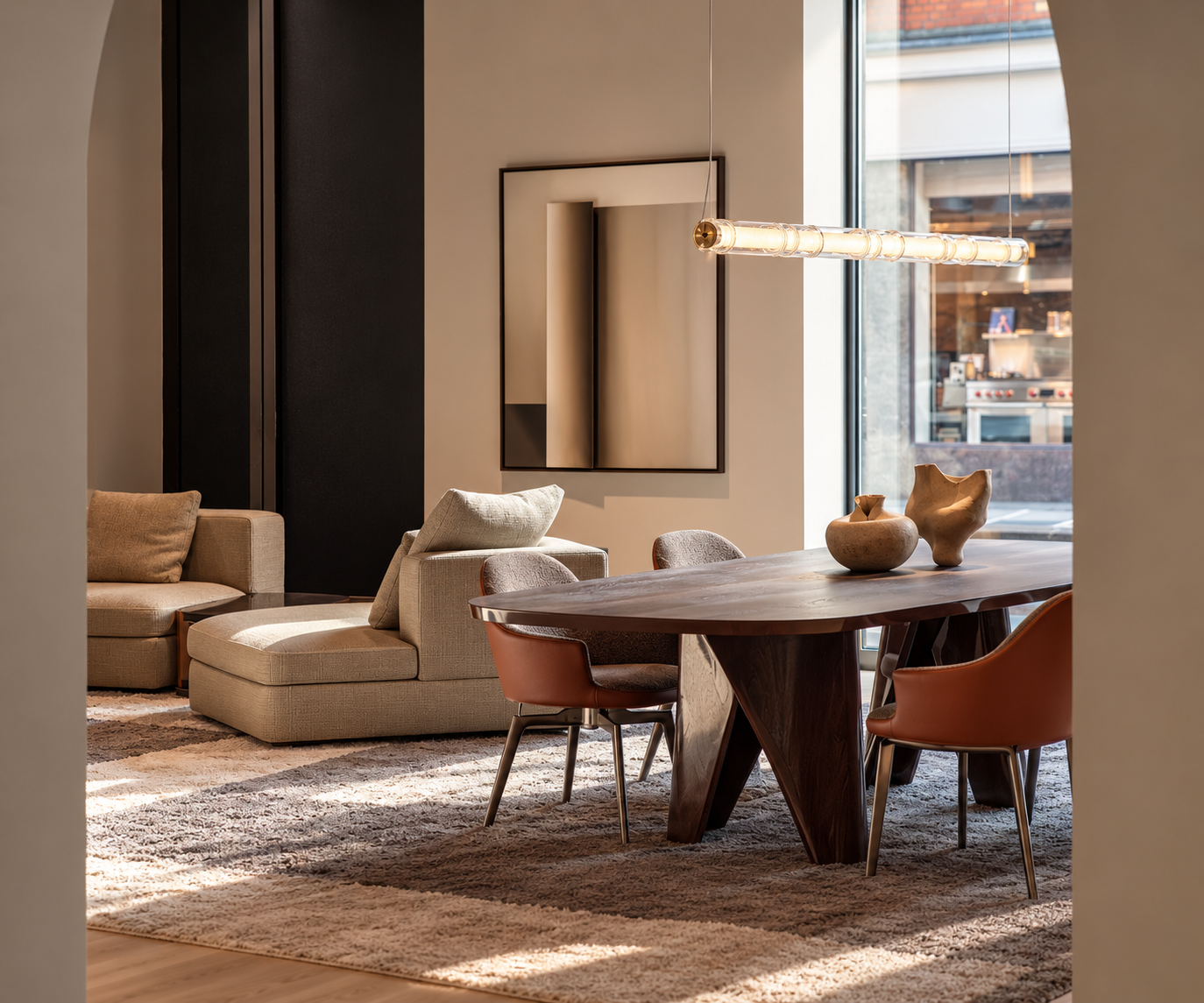
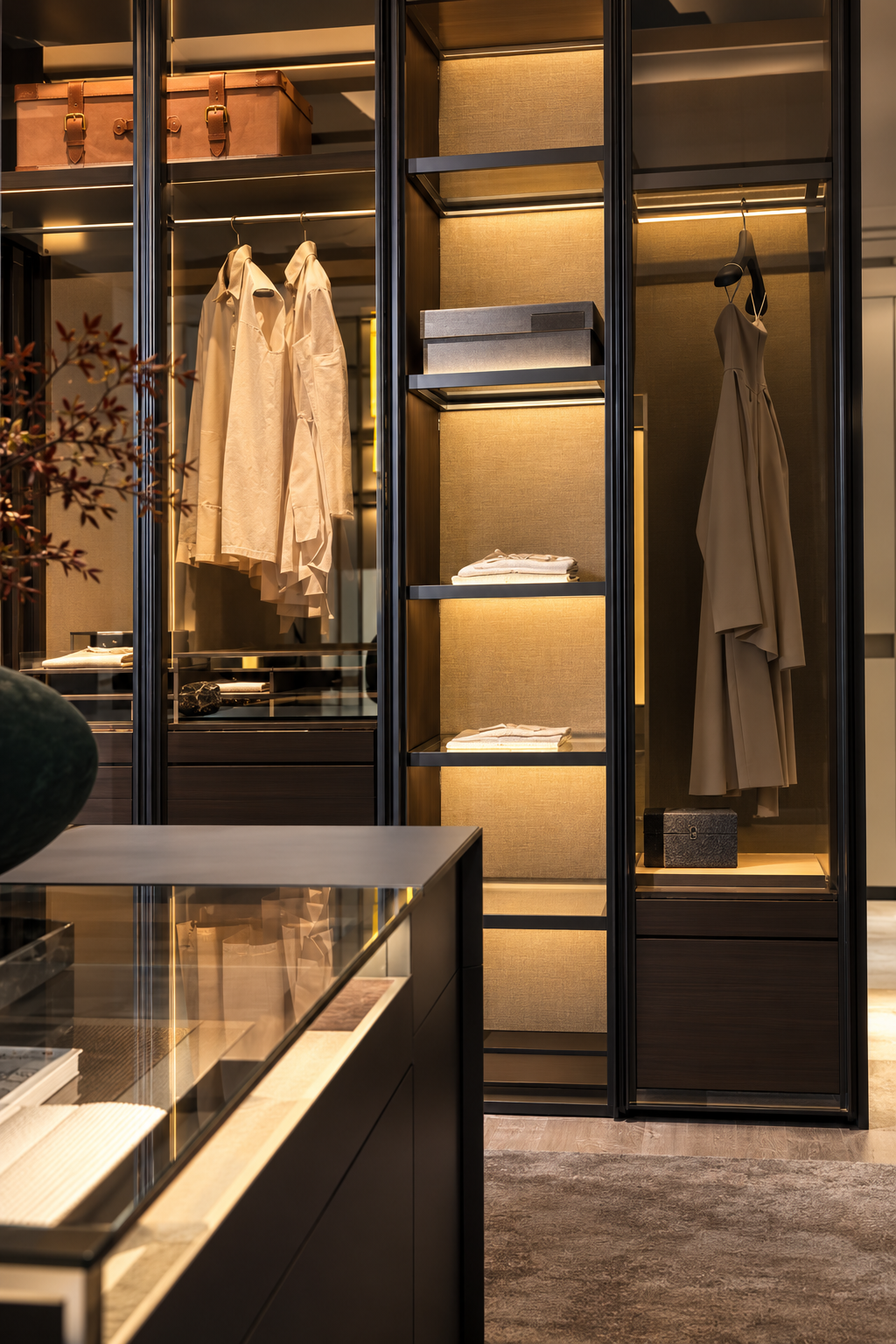
At Baxter Gallery London, the mood became considerably more expressive. For London Design Festival, Baxter presented TILE, a limited-edition collection by Draga & Aurel built around the idea of an upholstered architectural module. The presentation was part of the official LDF programme. Geometry, leather, texture and changing reflections of light transform a relatively simple form into something sitting somewhere between furniture, architecture and collectible art.
What interested us was the tension between discipline and expression. The geometry is rigorous, but the material treatment makes it sensual. It is also a reminder that not everything in an interior needs to quietly support everything else.
Sometimes one sculptural object can carry more personality than an entire room filled with competing statements.
House of Hackney: The Confidence to Decorate
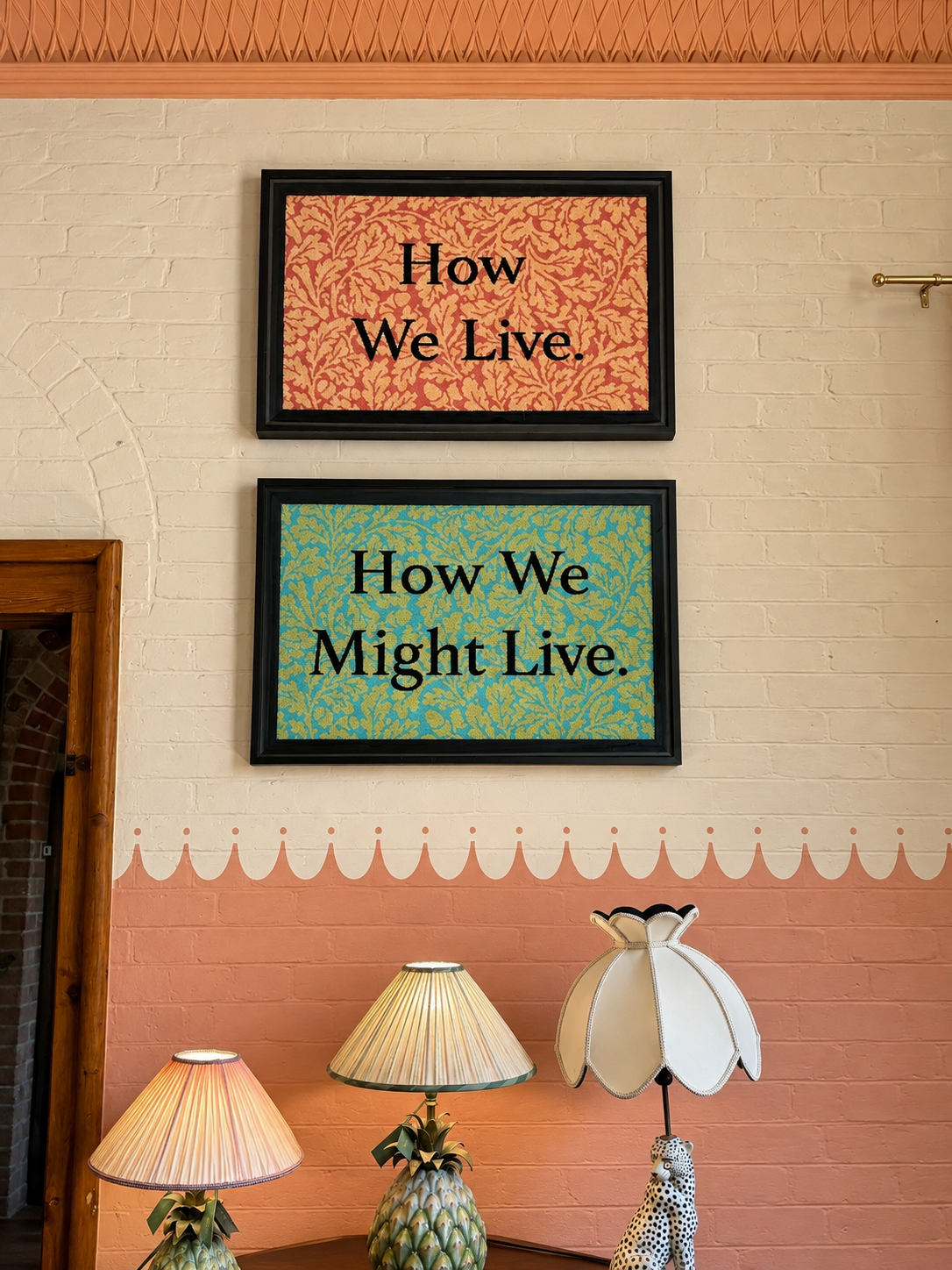
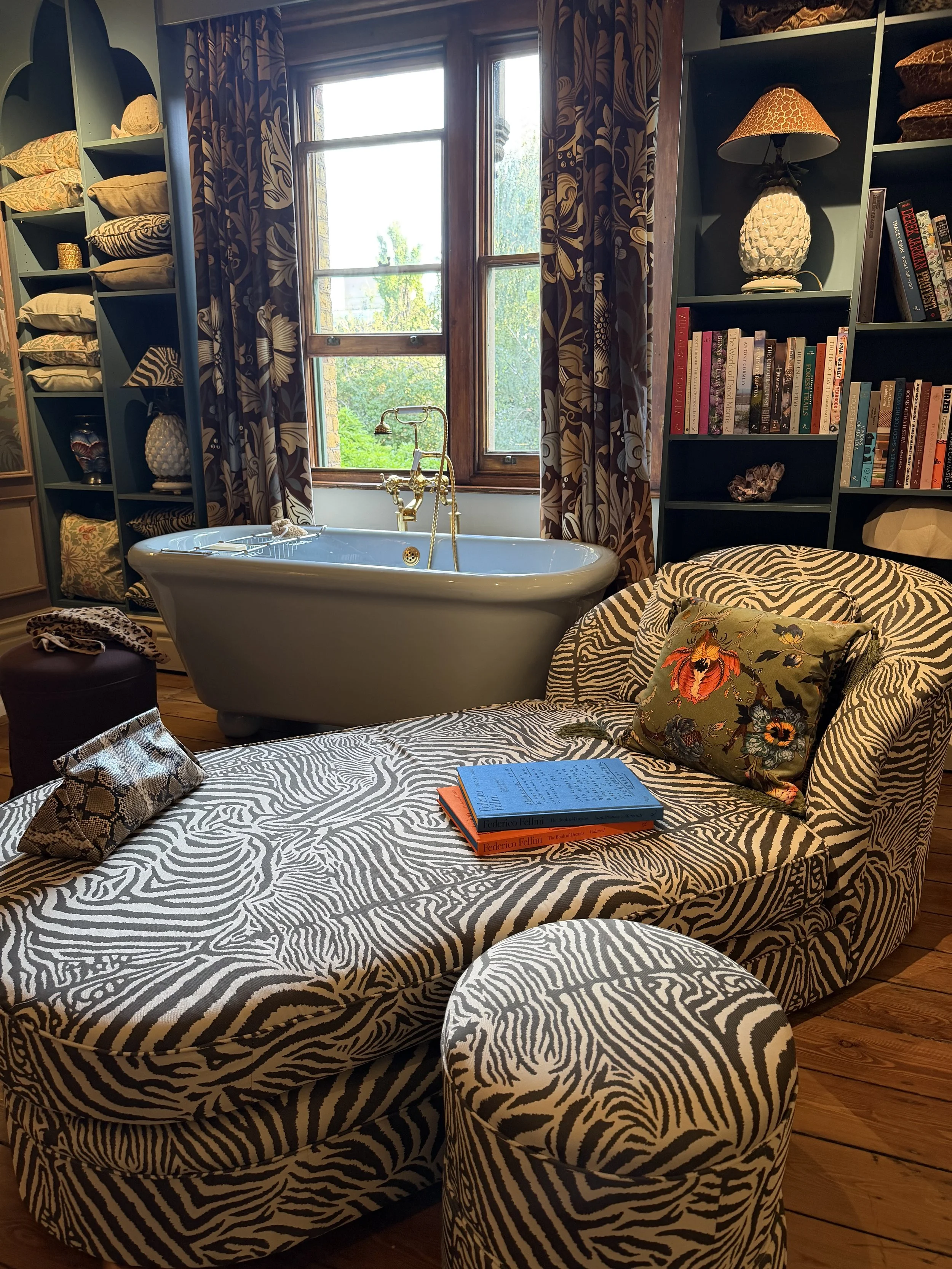
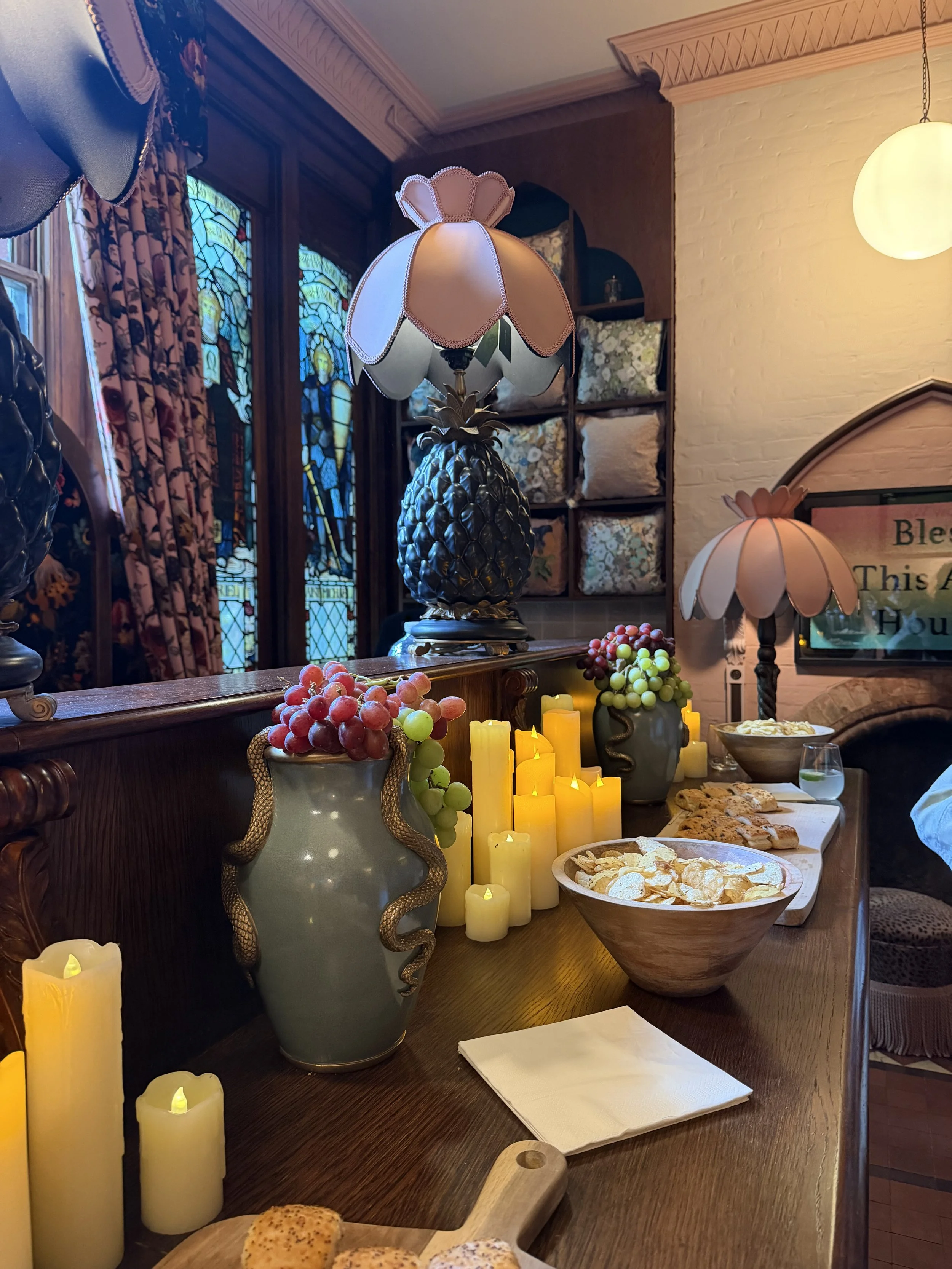
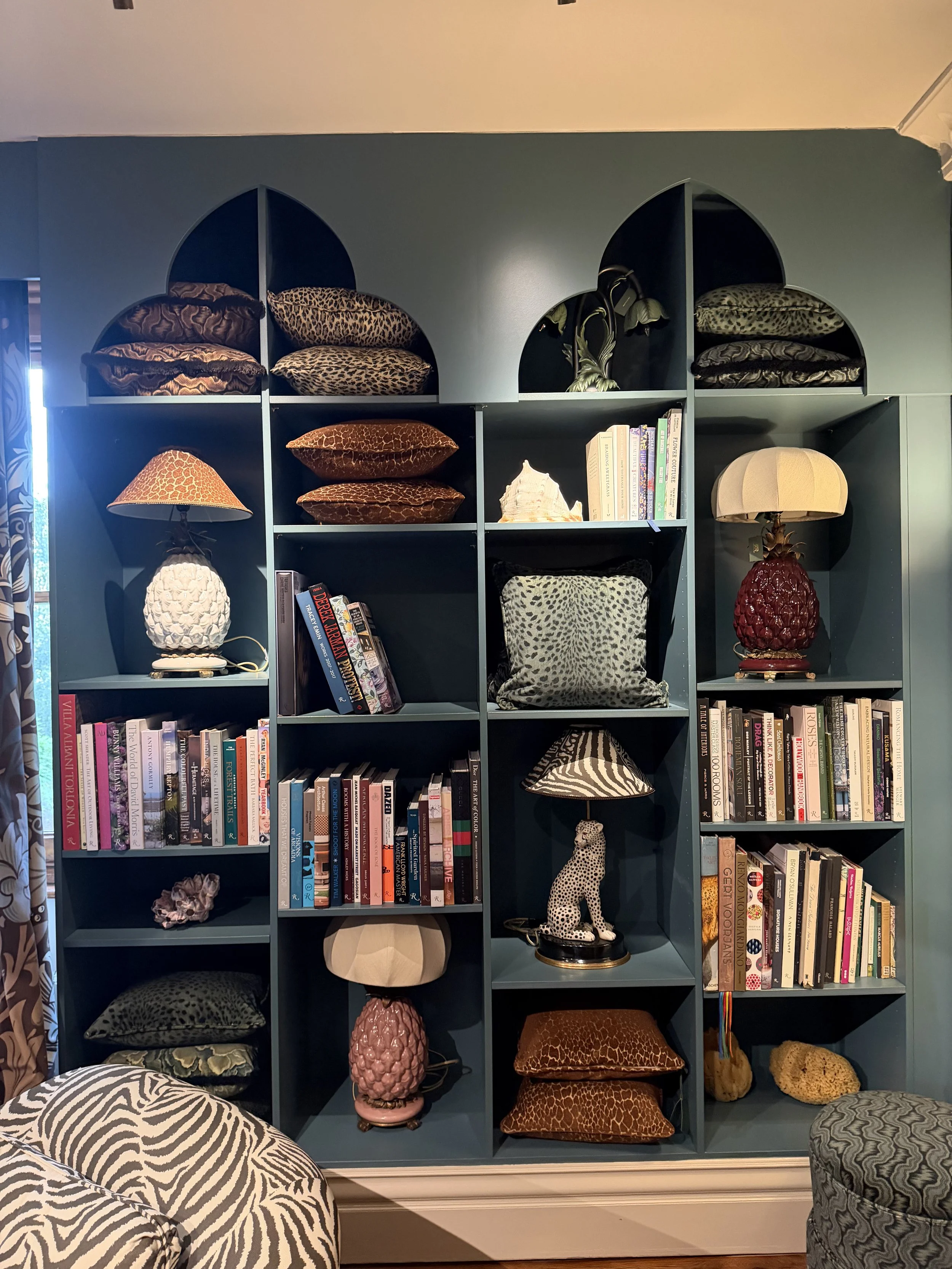
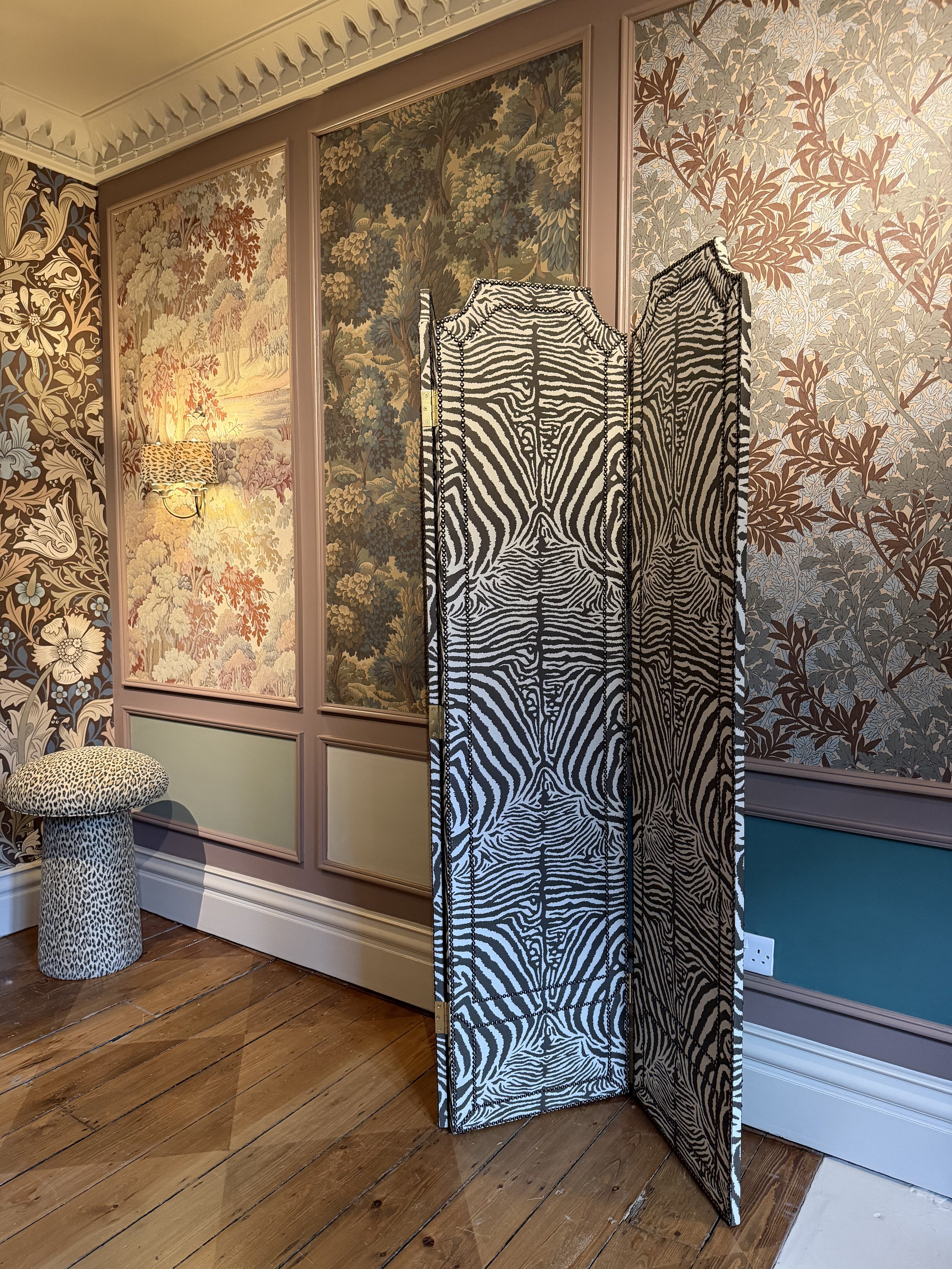
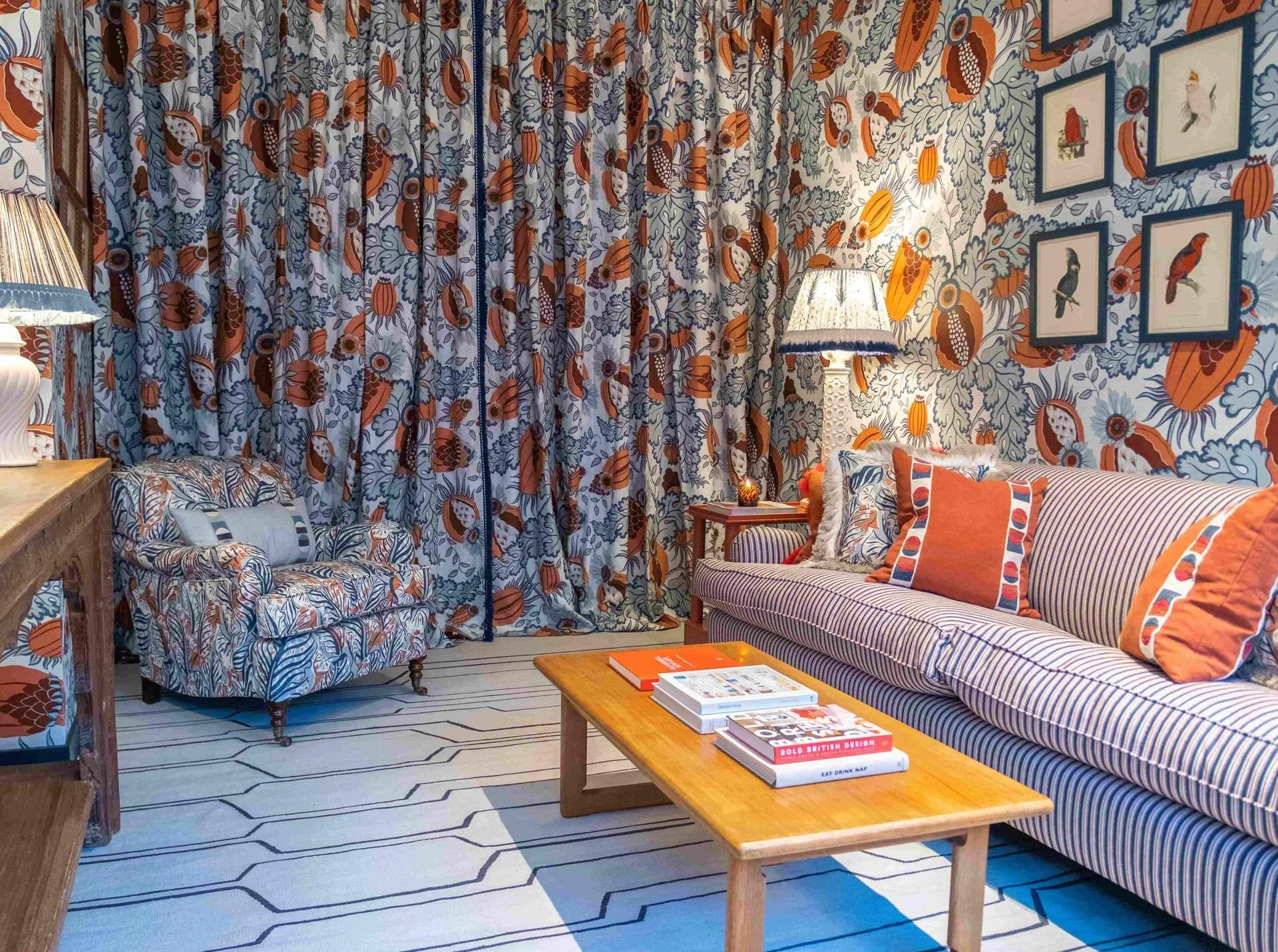
Finally, House of Hackney took us almost as far as possible from the restraint of Boffi. Pattern meets pattern. Colour is allowed to dominate. Decoration is not apologised for.
Seen within the same week, that contrast was particularly interesting. Because perhaps the conversation about interiors has been framed incorrectly.
The choice is not really between minimalism and maximalism.
A restrained room can have nothing to say. An intensely decorated room can become equally unsuccessful when every element competes for attention.
What matters is hierarchy and intention.
What London Design Festival 2026 Told Us About Interiors Now
After moving between such different design languages, we did not come away with a list of colours or materials everyone should suddenly be using.
We came away thinking about conviction.
Boffi finds it through precision. Poltrona Frau through craftsmanship and longevity. B&B Italia through the conversation between archive and innovation. Molteni&C through increasingly complete systems for living. Baxter through material experimentation. House of Hackney through decoration.
And our conversation at YDF reminded us that even something as technical as lighting ultimately changes how a space is experienced.
These approaches contradict one another aesthetically, and that is exactly what makes them interesting. There is no single language for a beautiful interior.
For us at GJ Interior Design Studio, the more relevant question is whether a space understands what it wants to be.
Knowing when to restrain, when to layer and when to allow something unexpected to take centre stage may be more important than following any trend at all.
Shoreditch Design Week: A Look at What Comes Next
As part of London Design Festival 2026, Shoreditch Design Week offered something noticeably different from many of our other visits.
While much of the week was spent exploring established design houses and beautifully resolved new collections, Shoreditch felt more experimental. Here, the focus shifted towards emerging designers, students, new materials and ideas that are still developing.
And that is precisely what makes it interesting.
Rather than only showing us what design looks like now, Shoreditch offered a glimpse into where the next generation of designers is directing its attention.
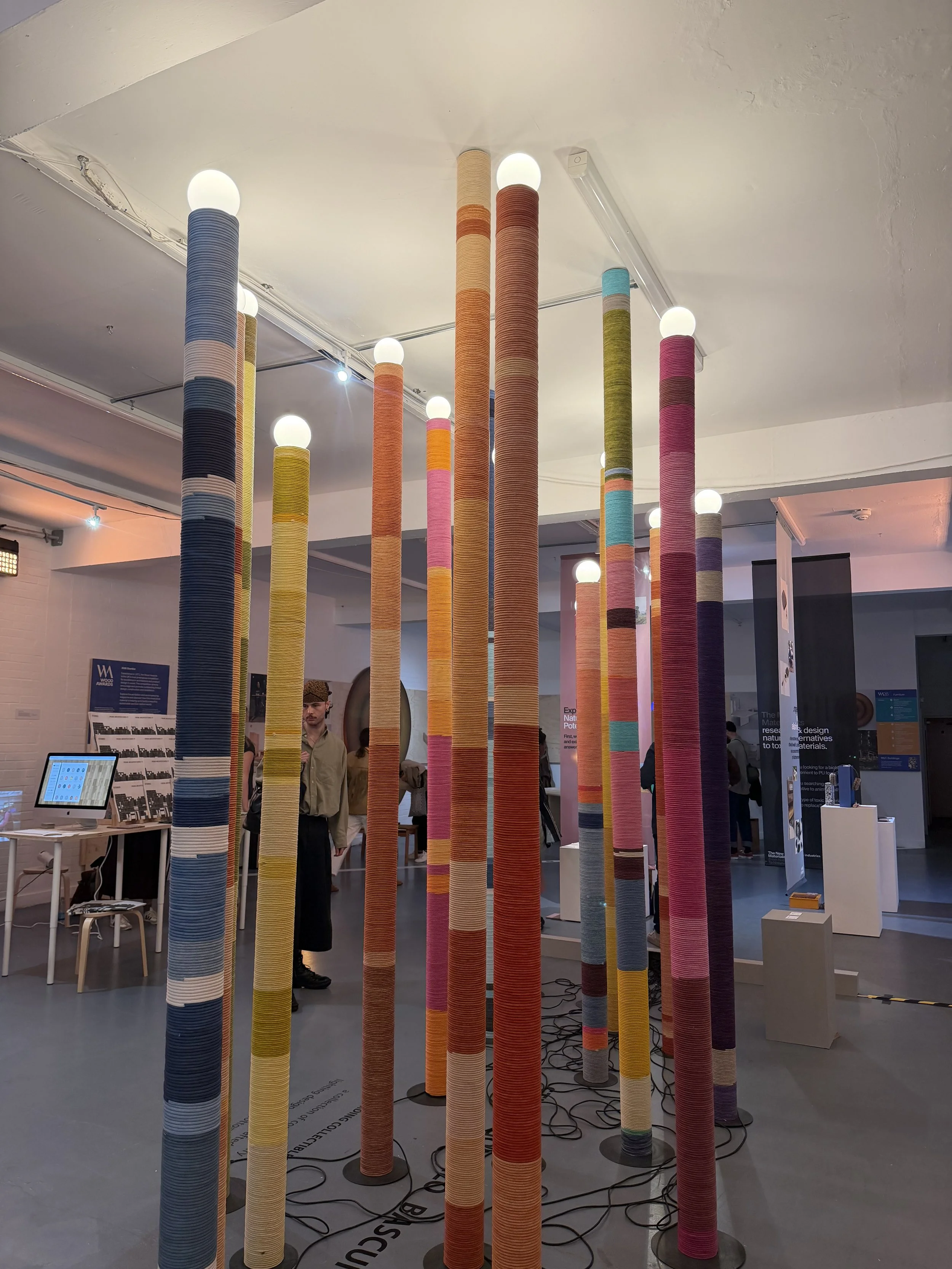
One subject appeared again and again: sustainability.
Material Matters: Experimenting With What Comes Next
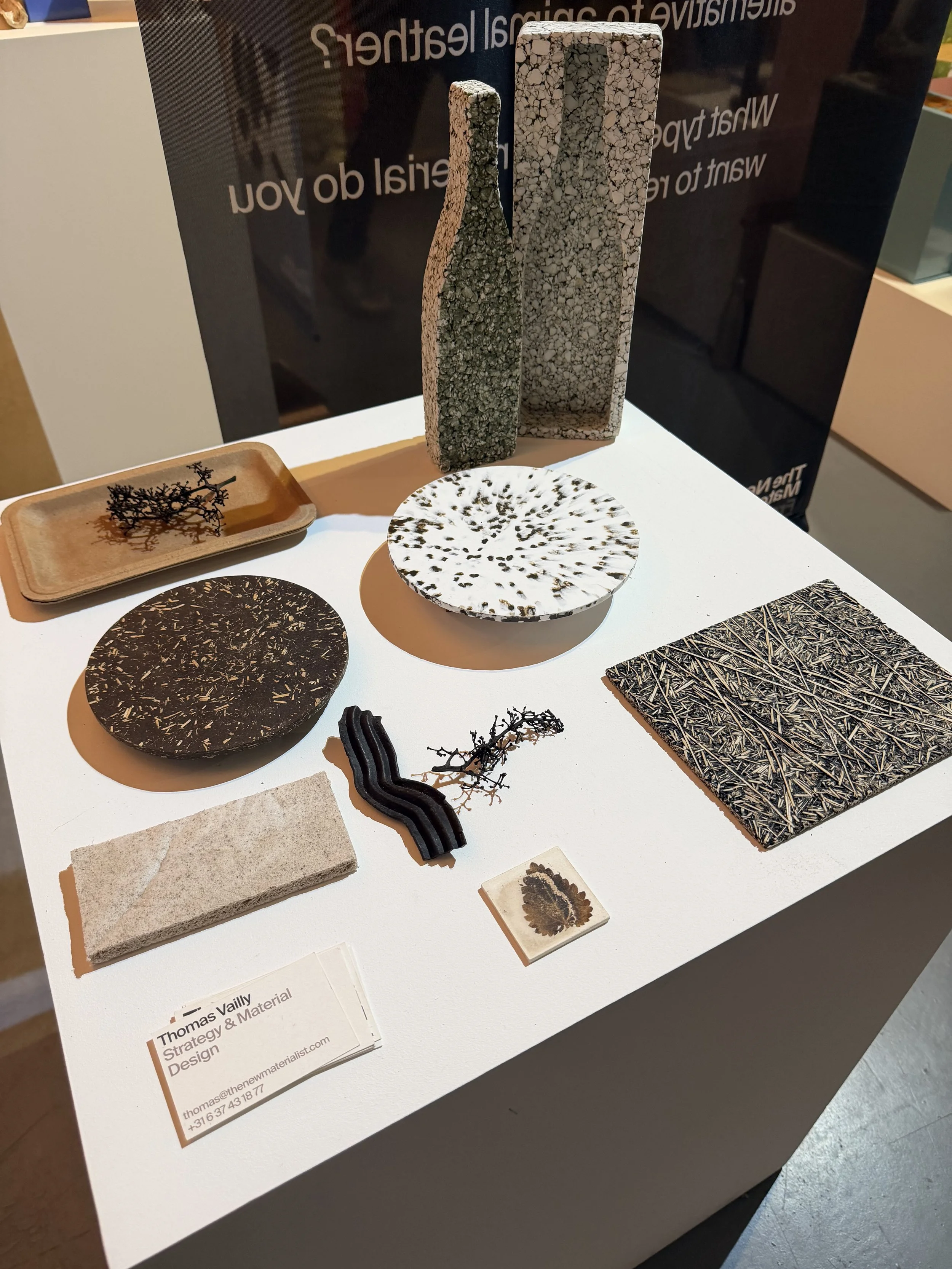
At Material Matters, more than 50 exhibitors explored materials across architecture, interiors and product design, with many questioning conventional manufacturing processes and our reliance on newly extracted resources.
We saw Mimmik Tile by FRONT and Biomason, which uses bacterial bio-cultivation rather than conventional kiln firing, alongside Carbon Cell's compostable biochar-based alternative to plastic foams and acoustic materials produced from post-consumer clothing waste.
Other ideas were surprisingly simple.
Tabitha Bargh works with materials including layered cardboard and reclaimed estate-agent boards, while Fallen & Felled transforms trees cut down in and around London into usable timber and furniture.
What interested us was not necessarily whether every experiment will become something we specify in an interior tomorrow.
It was seeing where designers are choosing to experiment.
Waste, local resources, biological manufacturing, circularity and the environmental impact of materials are clearly becoming part of the creative process itself, rather than questions addressed only once a product has already been designed.
Wood for the Trees: Reconsidering What We Already Have
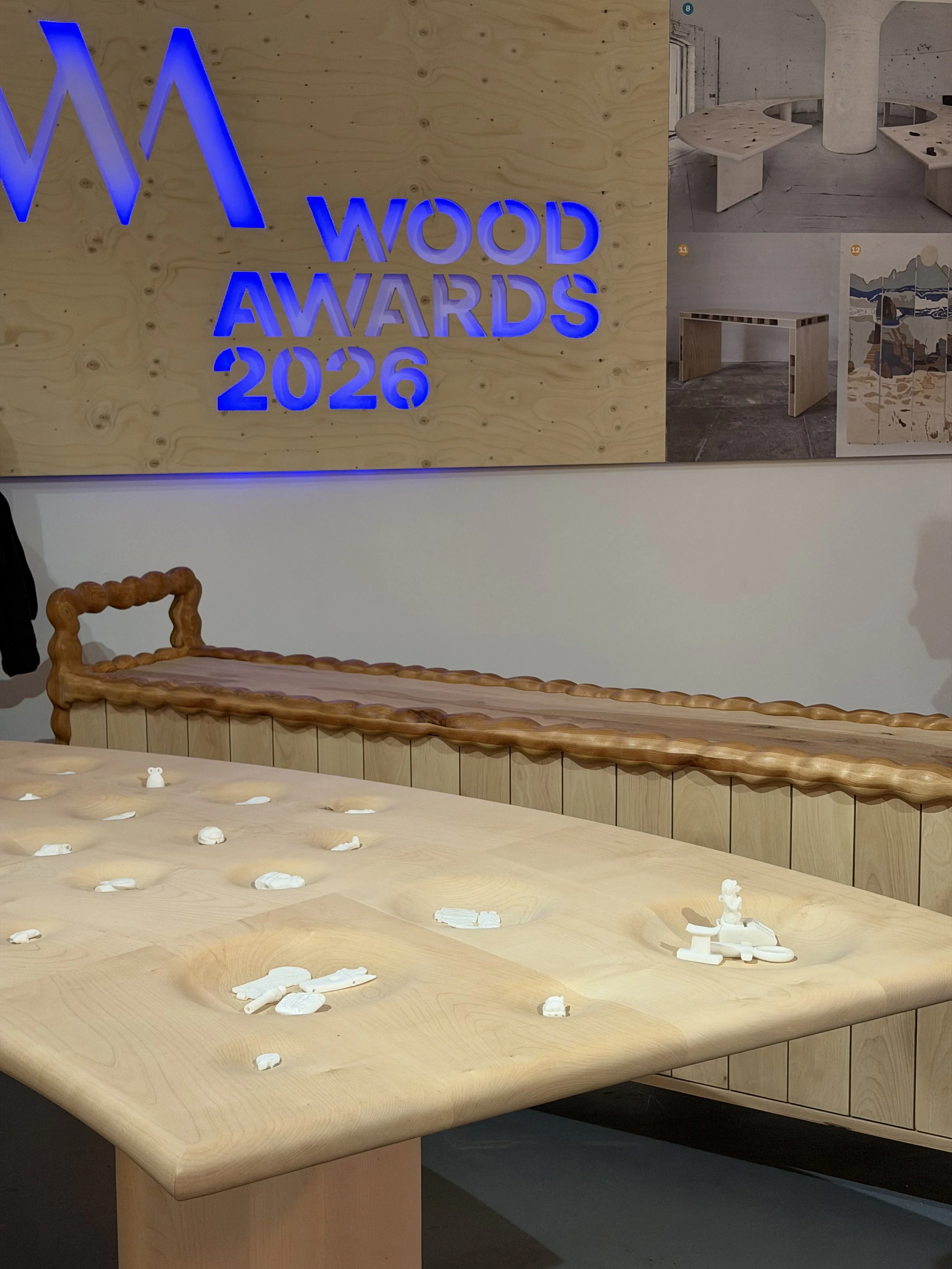
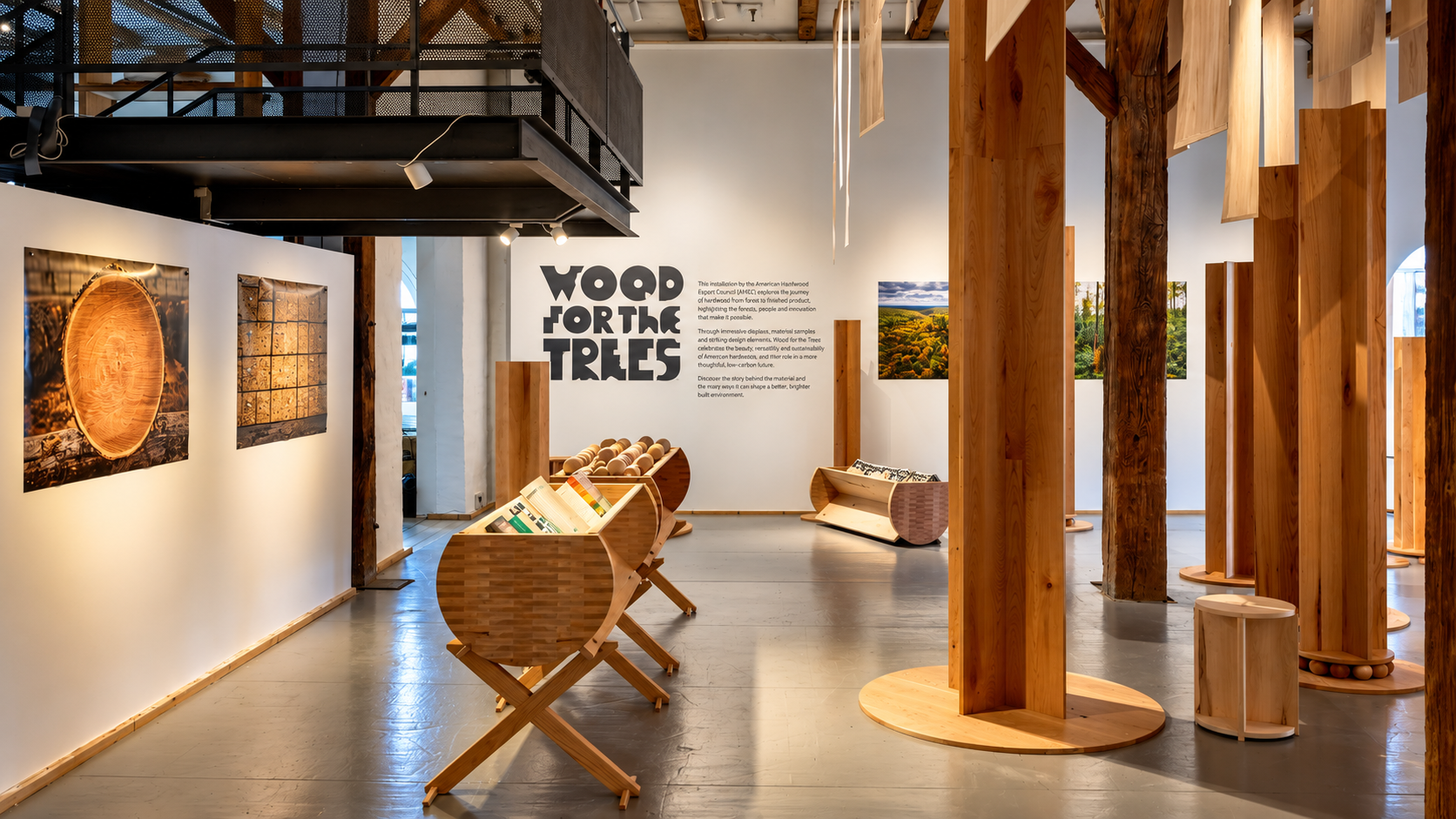
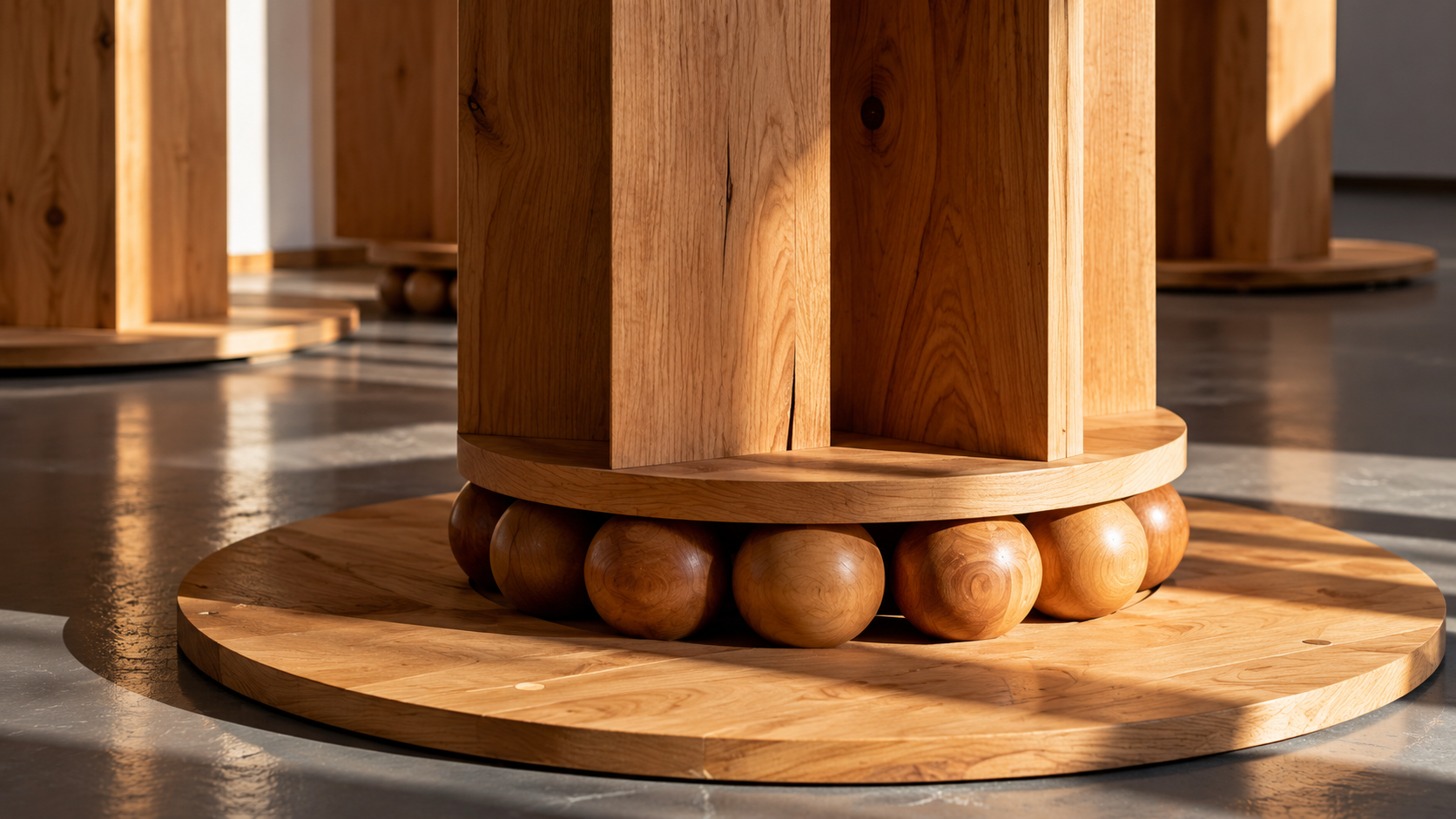
At Wood for the Trees, presented by the American Hardwood Export Council with Mitre & Mondays and Benchmark, the conversation continued through one of architecture's oldest materials: timber.
Here, the innovation was not about inventing a new material.
It was about using an existing one more intelligently.
Lower-grade American hardwoods were deliberately incorporated into finished pieces, allowing knots, colour variation and irregular grain to remain visible rather than automatically rejecting them.
It raises an interesting question about sustainability.
Do we always need a better material, or do we sometimes simply need to become better at using what nature has already given us?
Why Shoreditch Design Week Matters
This was what made Shoreditch feel so different from many of our other London Design Festival visits.
Established showrooms show us the result of years of refinement.
Shoreditch allows us to see some of the questions being asked before the answers are fully resolved.
Students, emerging designers, material researchers and young studios are experimenting with waste streams, biological materials, responsible forestry and alternative manufacturing processes.
Not every experiment will become mainstream.
But collectively, they reveal something important about where design thinking is moving.
For us at GJ Interior Design Studio, that is one of the most valuable reasons to visit.
Understanding design is not only about knowing what is available to specify today. It is also about paying attention to what the next generation is questioning, researching and trying to change.
And if Shoreditch Design Week was any indication, sustainability is no longer sitting alongside design as a separate conversation. For many emerging designers, it is becoming part of the starting point.
Focus/26 at Chelsea Harbour: Why the New Luxury Is About Looking Back
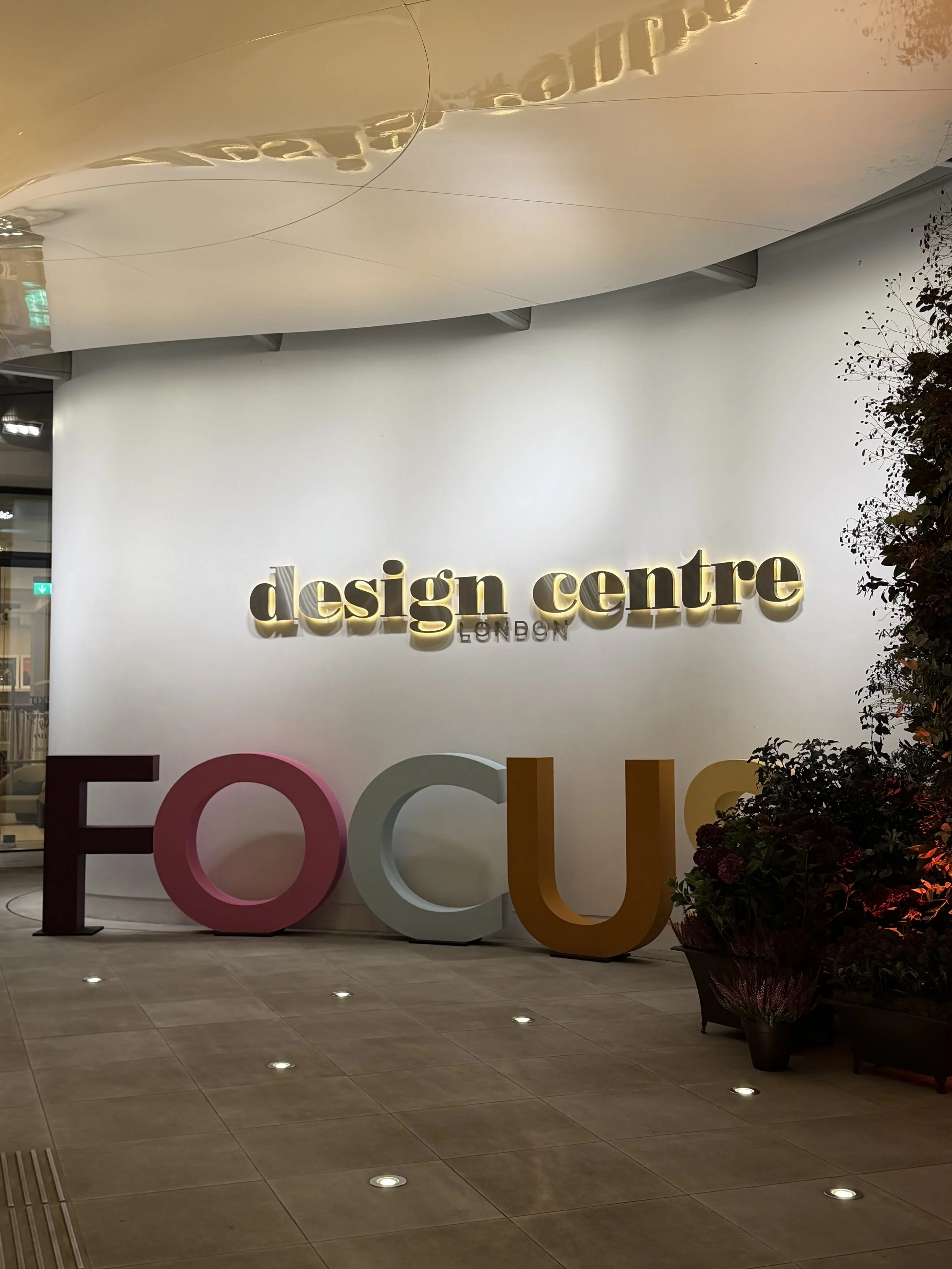
Focus/26 at Design Centre, Chelsea Harbour brought together the latest launches in textiles, wallcoverings, furniture and decorative design.
Among everything we saw, three houses particularly caught our attention: Pierre Frey, Schumacher and Ralph Lauren Home.
At first, they could not feel more different. One looks to French decorative history and European craft, another celebrates the intricacy of embroidery and textile detail, while the third constructs an entire world around the romance of the country estate.
Yet there was a common thread.
Heritage is very much present, but nobody seems particularly interested in reproducing the past exactly as it was.
Instead, archives, historic craft, traditional weaving and decorative references are being taken apart and reassembled for contemporary interiors.
Perhaps the new luxury is not about newness at all. Perhaps it is about depth.
Pierre Frey: The Archive as a Design Tool
There is something particularly interesting about the way Pierre Frey approaches history.
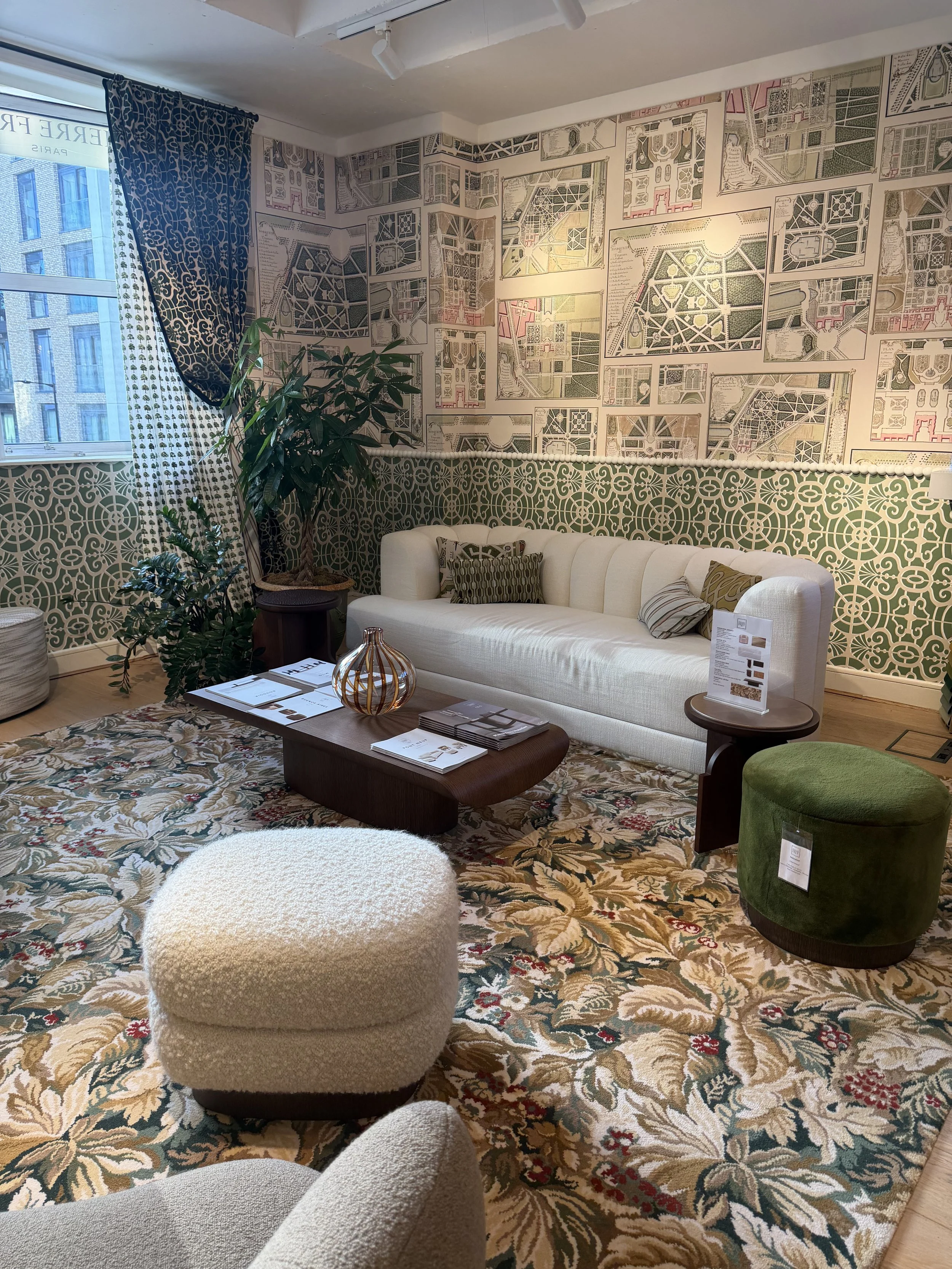
Founded in Paris in 1935, the house has built an extraordinary archive of textiles and decorative documents. Rather than simply reproducing them, these references become starting points for something new.
The 2026 Jardin à la Française collection is a perfect example. Its inspiration comes from one of the most controlled forms of landscape design: the formal French garden.
Think Versailles. Geometry, symmetry, clipped hedges, parterres and nature organised almost architecturally. Pierre Frey translates these ideas back into the interior through botanical motifs, contemporary artworks and exceptional archival documents.
There is an interesting reversal happening here.
Landscape becomes pattern, and pattern becomes architecture for the interior.
Elsewhere, Barfleur takes a warmer approach to nature, combining foliage, tartans, stripes and graphic motifs with woody tones and rich textures.
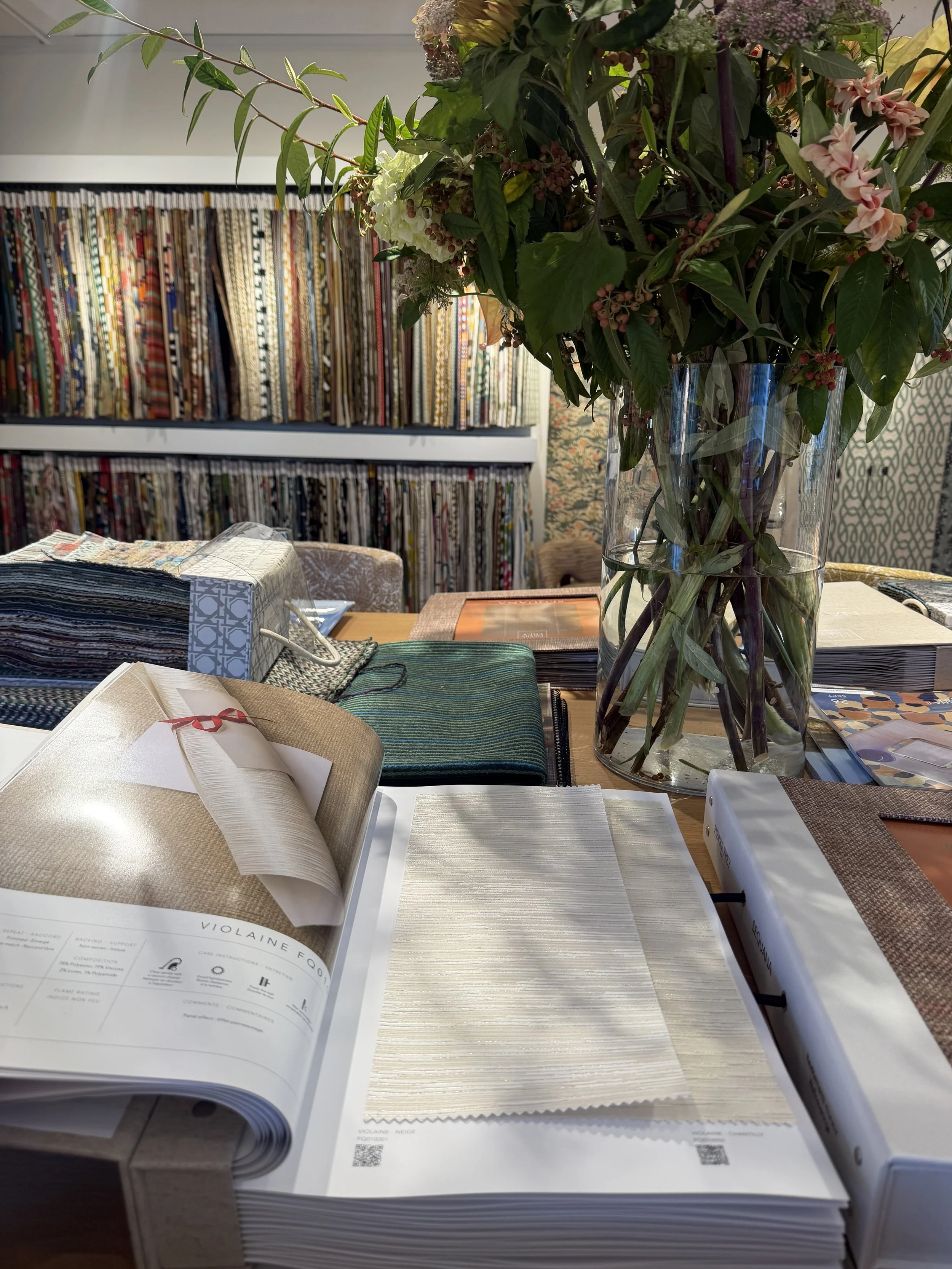
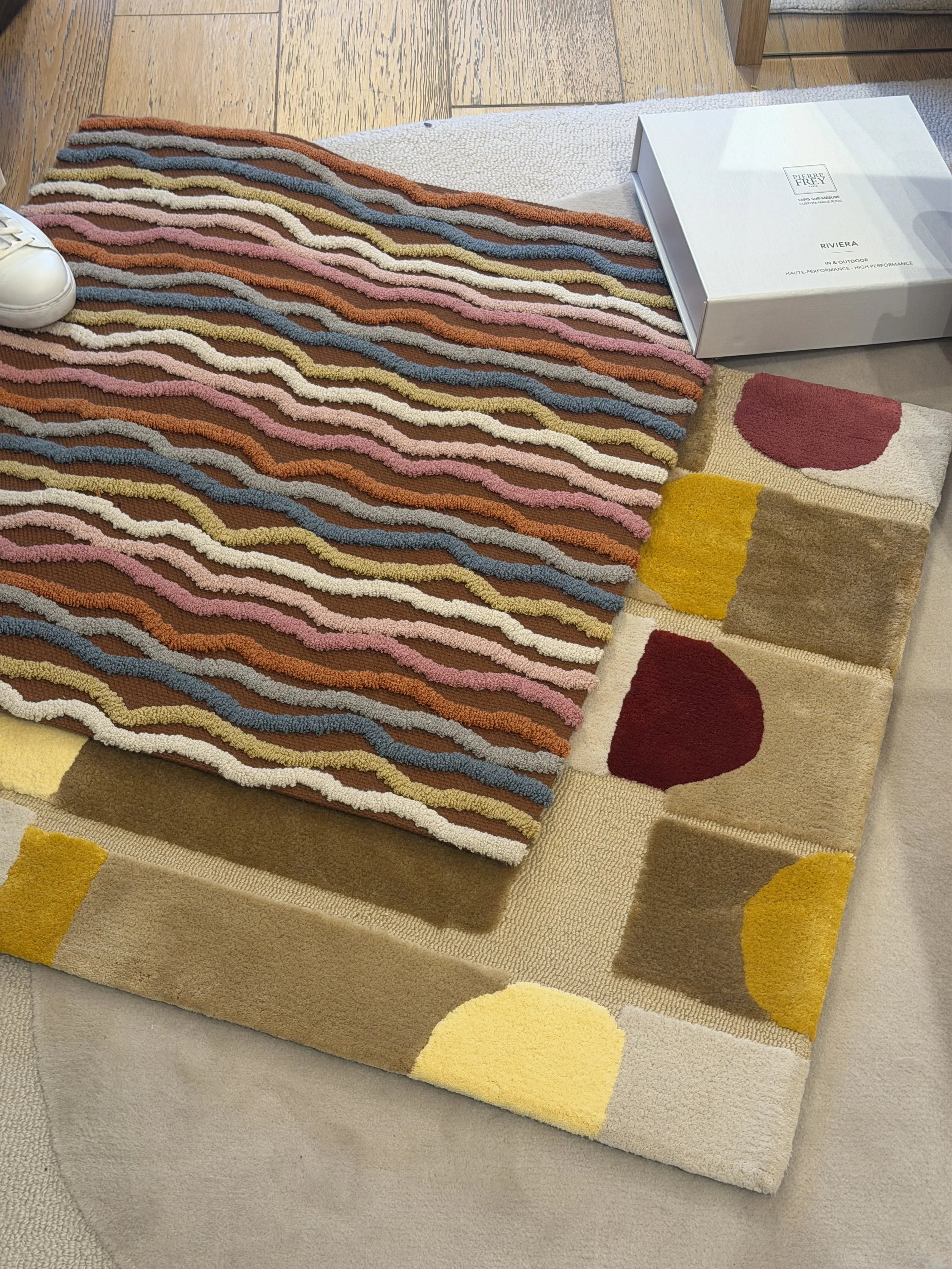
Then Sequana II changes direction again, looking towards the language of traditional Irish weaving. Donegal-style flecked yarns, herringbones, twills, checks, stripes and multicoloured bouclé bring irregularity and depth into the collection.
French gardens. Natural landscapes. Irish weaving. Different histories, brought into the contemporary interior through material and pattern. And this is where seeing textiles in person still matters.
A photograph can show you pattern. It cannot properly communicate the irregularity of a woven yarn, the depth of a bouclé or the way several colours begin to reveal themselves within a fabric as you move past it.
Schumacher: The Return of the Decorative Edge
At Schumacher, our attention moved from pattern at room scale to something much smaller: the stitch.
Founded in 1889, Schumacher has more than a century of textile history behind it. During Focus/26, its programme included Beyond the Stitch: The Artistry and Heritage of Embroidery, Borders and Decorative Detail.
It made us think about something that has been disappearing from many contemporary interiors.
The importance of the edge.
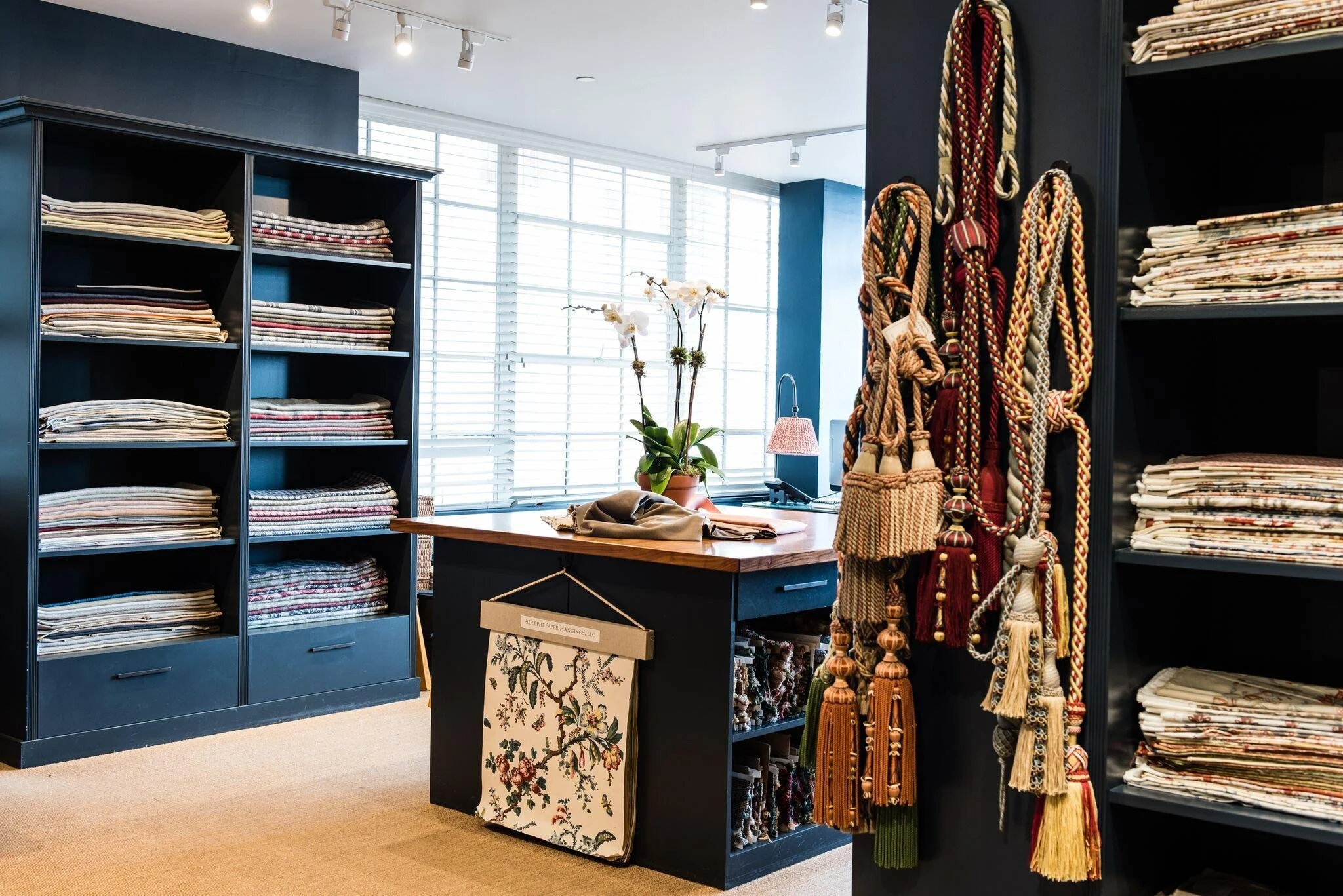
Historically, passementerie, the craft of decorative trims, braids, tassels, fringes and borders, did much more than simply decorate a room. A border could define the edge of a curtain. Braid could trace the geometry of an upholstered chair. Fringe could completely alter its silhouette. Then came decades of increasingly stripped-back interiors, where the ambition was often to make these details disappear.
At Schumacher, we were reminded of what happens when they return.
Move closer to an embroidered textile and suddenly you notice the direction of a stitch, the relief against the ground cloth, an unexpected colour introduced through a border or the additional dimension created by a trim.
After years of interiors trying to hide their edges, decoration is beginning to define them again.
That does not mean every cushion suddenly needs a fringe. It means recognising that sometimes the smallest detail is what makes an interior feel complete.
Ralph Lauren Home: Designing a World, Not a Collection
Then we stepped into Ralph Lauren Home, and the experience changed again.
For Focus/26, the showroom presented Saddlebrook, its Fall 2026 collection inspired by the atmosphere of a country estate.
Floral jacquards, velvet, matelassé, menswear-inspired patterns and rich autumnal tones are layered together to create something that feels collected rather than newly decorated.
But perhaps the most interesting thing about Ralph Lauren Home is not any individual fabric or piece of furniture.
It is the ability to create a world.
When Ralph Lauren Home launched in 1983, it was the first complete home collection created by a clothing designer, with more than 2,000 pieces conceived as a complete environment rather than a collection of isolated products.
More than four decades later, that philosophy is still immediately recognisable. You are not simply being shown a bed, chair or textile. You are being shown the person who might live there. Perhaps they ride horses. Perhaps the family has owned the house for generations. Perhaps the rug was inherited and the chair has always sat beside the fireplace.
Of course, that story may be entirely imagined. But that is precisely the point.
Ralph Lauren is exceptionally good at designing atmosphere.
There is something almost cinematic about it. The interior feels as though its characters might return at any moment. And there is a useful lesson here for residential design.
The strongest interiors rarely feel as though everything arrived on the same day.
Different periods, patterns and levels of formality coexist. Something polished sits beside something worn. Florals meet stripes. Fine textiles meet timber that becomes richer with age. It is that layering that gives a room depth.
What Focus/26 Told Us About Interiors Now
Looking back at these three showrooms, the most interesting thing we saw was not a particular colour, pattern or material.
It was a changing attitude towards the past.
Pierre Frey uses archives, landscape and traditional craft as material for new ideas.
Schumacher reminds us of the expressive potential of embroidery, borders and the decorative edge.
Ralph Lauren Home takes historical references and uses them to construct an entire imagined way of life.
None of them suggest that contemporary interiors need to look contemporary in the most obvious sense.
And perhaps that was our most interesting takeaway from Focus/26 at Design Centre, Chelsea Harbour.
A French garden becomes a textile. An Irish weaving tradition becomes a contemporary surface. Embroidery returns to the edge of a curtain. Historical references become the foundation of an entirely new interior world.
The references are old. The way they are being combined is entirely contemporary.
Sometimes looking forward in design begins by knowing where to look back.
Journal notes
Events: London Design Festival, Shoreditch Design Week & Focus/26
Location: London, United Kingdom
Focus: Interior design, furniture, lighting, materials & textiles
Visited by: GJ Interior Design Studio
Published: 2026